

Lesson Plans for Every Classroom
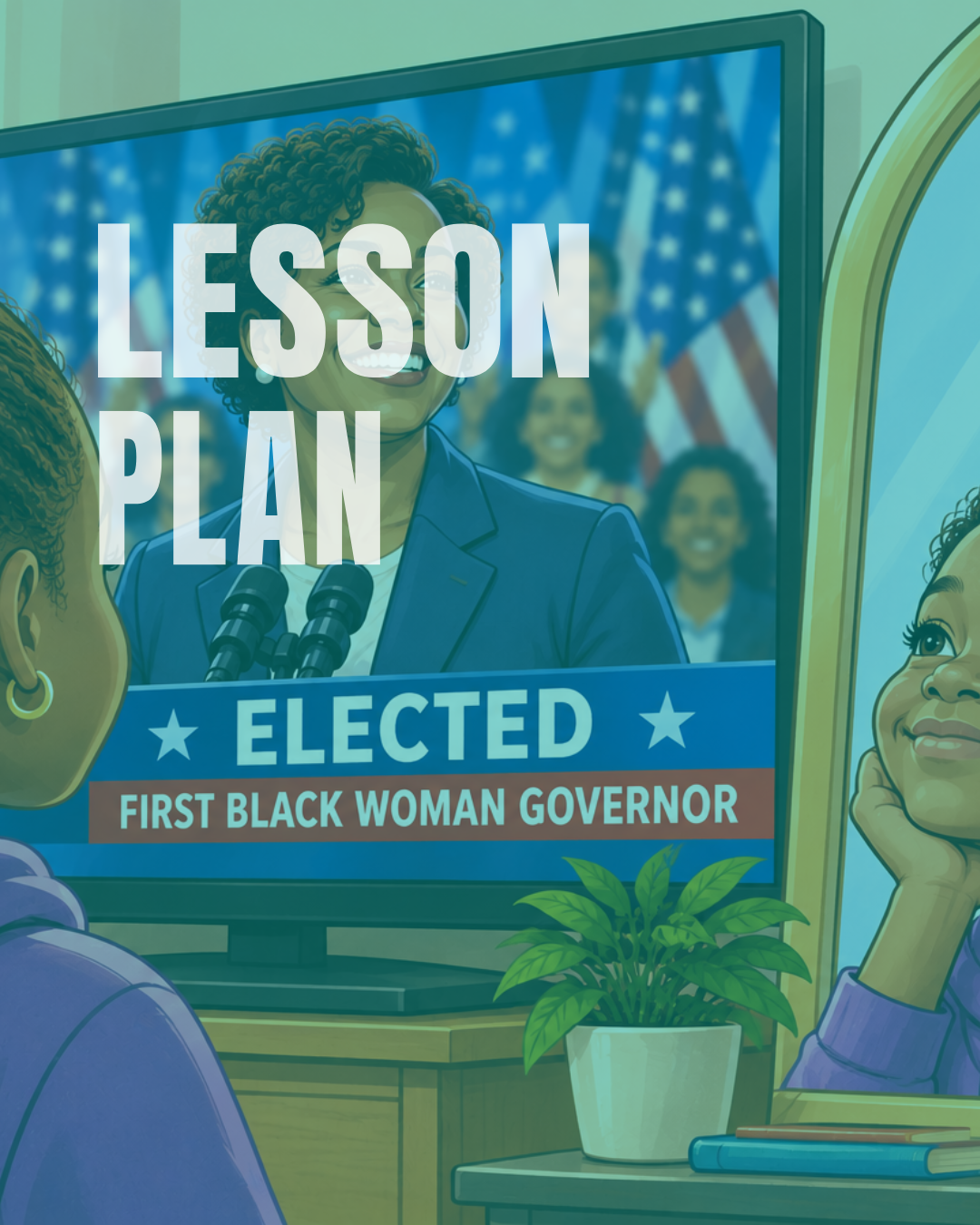
Who Speaks for Us? Why Representation Matters
In the U.S. 2026 midterm elections, there were many “historical firsts.” Keisha Lance Bottoms became the first Black woman Governor in U.S.history. Abdul El-Sayed is now the first Muslim Senator in the U.S. Chris Pappas became the first openly gay man in the Senate. There are many others. These historical firsts are important and meaningful because the people we elect to represent us should not only represent our views, opinions and policy positions. They should also be representative of the diversity of our country. In this lesson, students will explore the concept of “representation,” learn about some of the historical firsts elected during the 2026 midterm elections, and research one of those elected officials in depth.

Congressional Maps, Redistricting and Gerrymandering: What Does it All Mean?
Redistricting congressional maps and gerrymandering have been in the news a lot lately. What are congressional maps, and how does redistricting, when done for political purposes, lead to gerrymandering? While redistricting is a normal process for how voting maps are drawn, racial gerrymandering is often used as a political tool to change or manipulate election outcomes and to give an unfair advantage to a political party. In this lesson, students will learn about congressional maps, redistricting, and gerrymandering, explore the impact of gerrymandering on voters and elections, and analyze news headlines about recent gerrymandering efforts.

Who Gets to Vote? The History and Erosion of Voting Rights
The Voting Rights Act of 1965 was designed to prohibit racial discrimination in registration and voting nationwide. It was landmark legislation and passed overwhelmingly by the House of Representatives and Senate, and signed into law by President Lyndon Johnson on August 6, 1965. It has been seen as extremely successful in overcoming voting discrimination. However, over the years, there has been a chipping away–and some would argue a “gutting”--of the Voting Rights Act because of Supreme Court rulings and voter suppression efforts. In this lesson, students will explore the history of voting rights and the Voting Rights Act of 1965, examine how it has been eroded, and create an original piece of writing that expresses their perspective on voting rights.

ICE’s Actions and Our Constitutional Rights
In late 2025 and early 2026, ICE’s (Immigration and Customs Enforcement) “Operation Metro Surge” took place in Minneapolis and St. Paul, Minnesota. The purpose of this “surge” was to apprehend and deport undocumented immigrants as part of ICE's larger efforts nationwide. There was a great deal of media attention on what happened in Minnesota, not only because several people–including Renee Good and Alex Preti– were shot and killed by ICE agents, but there were ongoing allegations that what the federal government was doing violates people’s constitutional rights. In this lesson, students will explore and understand the First and Fourth amendments, connect those constitutional rights to the actions of ICE and reflect on the roles different people can play in challenging these actions.

Voices in Danger: Free Speech, Activism, and the Threat of Deportation
Over the past several months, the current U.S. government began cracking down on foreign college and graduate students and faculty who have voiced support for specific political causes. Colleges and universities across the country are seeing students and faculty either arrested by Immigration and Customs Enforcement (ICE) or having their visas revoked. In many of these situations, official charges have not been disclosed. For this reason, many are wondering if these arrests are due to the students’ activism and a violation of their rights to freedom of speech. This lesson provides an opportunity for students to learn more about freedom of speech, understand some of these recent arrests, consider their points of view about this and express it in a letter.

Should 16 and 17 Year Old's be Allowed to Vote?
At its core, voting is about expressing opinions. Whether it’s voting in a political election, completing a survey about a product or service, or liking a social media post, your vote is your voice. There is a long history of voting rights in the U.S., dating back to the ratification of the Constitution in 1877. As part of that history, 1971 was the year that the voting age was reduced from twenty-one to eighteen years old. There is a movement today to lower the voting age to sixteen. In this lesson, students will learn about the purpose of voting, reflect on their own points of view about whether the voting age should be lowered, and consider the pros and cons for allowing sixteen and seventeen year-olds to vote.